
Last updated: · rewritten after several seasons of starting celery on a windowsill, and learning why patience at the germination stage is the whole game.

Celery has a reputation for being one of the fussier vegetables to grow, and there is some truth in it. It wants cool temperatures, consistent moisture, and a long season. But most of the difficulty comes from trying to grow it directly in the garden, where the weather is out of your hands. Indoors, you can control everything that matters.
Starting celery from seed indoors gives you three clear advantages. You get an earlier harvest, because the seedlings are already well grown by the time they go outside. You get more reliable germination, because the temperature stays steady. And you get stronger plants, because the seedlings are protected from cold, wind and pests during the fragile first weeks.
This post contains affiliate links. As an Amazon Associate I earn from qualifying purchases, at no extra cost to you.
This guide covers the whole indoor-to-outdoor cycle: choosing seed, sowing, germination temperature, watering, thinning, and the hardening-off process that gets the seedlings ready for the garden. If you have struggled to grow celery before, the fix is almost always in this list.
Quick answerSow celery seeds indoors 8–10 weeks before your last frost. Scatter the tiny seeds thinly over moist seed compost, cover with just a dusting of compost, and water gently. Keep the tray at 21–24°C (70–75°F) — a heat mat helps — and expect germination in two to three weeks. Keep the compost consistently moist through germination. Thin the seedlings once they are large enough to handle, and harden them off for a week before planting them out into rich, moist soil.
| At a glance | Details |
|---|---|
| Sowing time | 8–10 weeks before last frost |
| Sowing depth | Barely covered — a thin dusting |
| Germination temperature | 21–24°C (70–75°F) |
| Germination time | 2–3 weeks |
| Watering | Consistently moist but not soggy |
| Light | Bright light from germination onward |
| Hardening off | 7 days before planting out |
| Planting out | After last frost; rich, moist soil |
Why Start Celery Indoors?

Celery grown directly from seed in the garden is a gamble. The seeds are tiny, the soil has to stay consistently moist for weeks, the weather has to stay cool and steady, and the young seedlings are vulnerable to slugs, snails and birds. Each of those problems is much easier to manage indoors.
There is also the timing advantage. A celery plant grown from seed needs a long season to reach a decent size — around five months from sowing to harvest. Starting indoors eight to ten weeks before the last frost gives you that time without subjecting the seedlings to cold, wet spring weather.
Choosing the Right Seed

Celery seed is tiny, and that matters for two reasons. The first is that it is easy to sow far too thickly — a pinch of seed can produce dozens of seedlings. The second is that poor-quality seed can have very low germination rates, so if the seed is old or badly stored, you can end up with an empty tray after three weeks of waiting.
Always start with fresh, high-quality seed from a reliable supplier. There are two main types of celery to choose from:
- Standard celery — thick, upright stems, usually pale green to white, and the type most people mean by "celery." Varieties like Utah 52-70 are the classic choice.
- Chinese celery — thinner, more aromatic stems and a stronger flavour. Excellent for stir-fries and soups, and easier to grow in some gardens because it is faster and less demanding.
Sowing Celery Seeds

Celery seed needs light to germinate, so it must be sown very shallowly — barely covered, or just pressed into the surface of the compost. Burying it even a centimetre deep can prevent germination entirely.
- Fill a seed tray or small pot with moist seed compost and firm it gently.
- Scatter the seed thinly across the surface. A light pinch is usually plenty for a small tray.
- Cover with just a dusting of compost — barely enough to hide the seed.
- Water gently with a spray bottle so you don't disturb the seed.
- Cover the tray with a clear lid or plastic bag to hold in humidity.
- Place somewhere warm — 21–24°C (70–75°F) is ideal.
Be careful not to overwater. The compost should be evenly moist, not soggy. Damp, cold conditions rot celery seed before it can germinate, and rot is the most common reason a tray of celery seed fails.
Germination

Celery seed germinates slowly, and the seedlings are tiny when they first appear. Expect two to three weeks at 70–75°F. A heat mat under the tray makes a real difference — the steady warmth speeds germination and gives you a much more even batch of seedlings.
The first leaves to appear are the seed leaves — two tiny, pale green leaves. These are soon followed by the first true leaves, which look more like a miniature version of the adult plant. The whole process from sowing to a transplantable seedling takes about six to eight weeks.
Watering and Early Care

Celery needs consistent light watering through germination and early growth. The compost should stay evenly moist at all times — never bone dry, never waterlogged. A spray bottle is the easiest way to achieve this without disturbing the tiny seedlings.
Once the seedlings are up, remove the cover and move the tray to bright light. Celery seedlings stretch toward the light very quickly if they don't get enough of it, and stretched seedlings never fully recover. A bright windowsill, or a grow light for 12–14 hours a day, gives them what they need.
If the seedlings come up very thickly, thin them once they have their first true leaves, leaving the strongest plants. Crowded seedlings compete for light and water and stay small.
Hardening Off

About seven days before you plan to plant out, begin hardening off. This is the process of gradually acclimatising the seedlings to outdoor conditions — the sun, the wind, and the cooler nights — so they don't go into shock when planted out.
Put the seedlings outside in a sheltered, shaded spot for two or three hours on the first day, then bring them back in. Increase the time outdoors by an hour or so each day, gradually moving them into brighter light and more exposed positions. By the end of the week, they should be outside for most of the day and ready for the garden.
If a cold night is forecast, bring them back in. The aim is gradual exposure, not a test of endurance.
Why Indoors Works Better

The reason indoor starting works better for celery is simple: you can control the two things celery cares about most — moisture and warmth. Outside, both fluctuate, and celery is not a plant that deals well with fluctuation.
The other advantage is that you can start early. Celery needs a long season, and starting indoors gives you a head start that outdoor sowing simply cannot match. A plant that is already six or eight weeks old when it goes outside will be ready to harvest weeks earlier than a direct-sown one.
Celery Seeds for Your Indoor Start
These are the celery seed options I would look at first, covering classic Utah types, Chinese celery and reliable heirloom varieties. Links are affiliate links — the disclosure follows at the end.
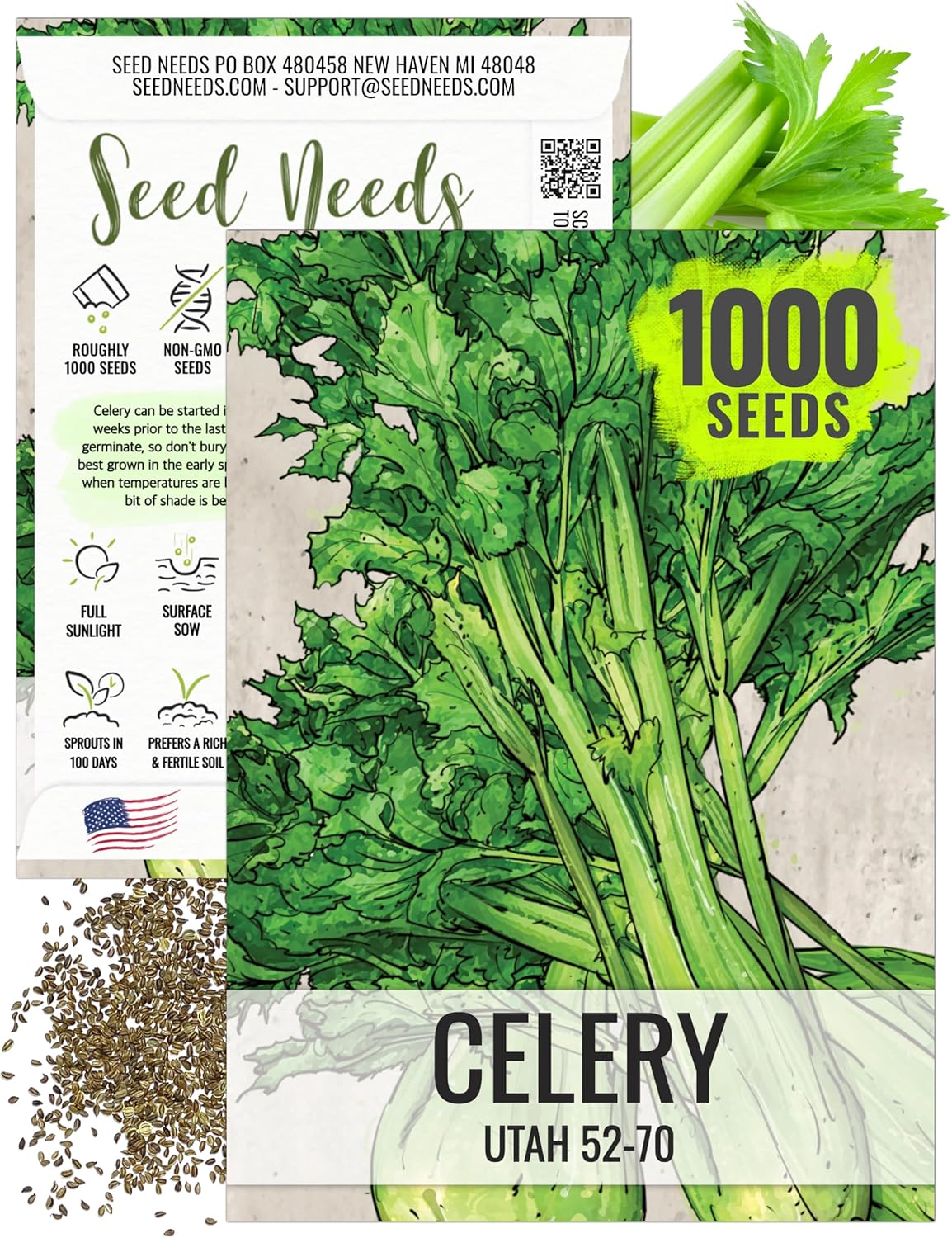
The classic Utah 52-70 celery in a single heirloom, non-GMO packet. Reliable stalks for the kitchen garden.

A thinner, more aromatic Chinese celery that suits stir-fries and soups. Good for outdoor vegetable gardens.

A single practical pack of celery seed for the home garden. Straightforward to sow and grow on.

Tall Utah 52-70 heirloom seed with easy-to-follow instructions and an 89% germination rate. Net weight 1.25 g.
Affiliate links above. As an Amazon Associate I earn from qualifying purchases.
Watch: How to Grow Celery Indoors
The whole indoor process — sowing, germination, watering, and getting the seedlings ready for the garden.
Prefer YouTube? Watch it there.
Frequently Asked Questions
How long do celery seeds take to germinate?
Two to three weeks at 70–75°F (21–24°C). Below that temperature, germination slows dramatically and can take four weeks or more. A heat mat under the tray makes a big difference.
Why didn't my celery seeds germinate?
The most common causes are old seed, sowing too deeply, or compost that was too wet. Celery seed needs light to germinate, so it must be barely covered. Wet, cold compost rots the seed before it can sprout.
How deep should I sow celery seeds?
Barely at all — just press the seed into the surface of the compost and cover it with a dusting. A depth of more than a couple of millimetres will prevent germination.
When should I start celery seeds indoors?
Eight to ten weeks before your last expected frost. Celery needs a long season, so an early start matters. In most temperate gardens that means sowing in late winter.
Do I need a heat mat for celery seeds?
It is not essential, but it makes germination faster and more even. Celery germinates best at 70–75°F, which is warmer than most homes in late winter.
Why are my celery seedlings leggy?
Not enough light. Celery seedlings stretch toward the nearest window very quickly. Move the tray to the brightest spot you have, or add a grow light for 12–14 hours a day.
When can I plant celery seedlings outside?
After the last frost, once the seedlings have been hardened off for a week and the soil has warmed. Celery prefers cool conditions, but it will not tolerate frost.
Can I grow celery indoors all year round?
You can start it indoors, but celery needs full sun and a long season to produce good stems. It is best grown on outdoors in the garden after a protected start.
Sources: RHS — Celery; NC State Extension — Apium graveolens; Utah State University Extension — Celery; Michigan State University Extension — Celery.
Final Thoughts
Celery is not the easiest vegetable to grow, but most of its difficulty comes from the weather. Starting it indoors gives you control over the two things that matter most — moisture and warmth — and that is usually enough to tip the balance in your favour.
The one thing that made the biggest difference in my own grows was the heat mat. Before I used one, my celery germination was slow and uneven. With one, the seedlings come up within a fortnight and the whole batch moves through the stages together.
If you have struggled with celery before, try again with fresh seed, a warm tray, and shallow sowing. The rest is patience.
More Seed Starting and Vegetable Guides
Enjoyed this guide? Never miss future growing tips by following us! Drop a comment below with your celery questions, your best seed-starting tips, or the varieties you grow, and let's grow something beautiful together. 🌱
Affiliate Warning / Disclosure
This website is a participant in the Amazon Services LLC Associates Program, an affiliate advertising program designed to provide a means for sites to earn advertising fees by advertising and linking to Amazon. Some of the links on this site are affiliate links. These are products that I've used or recommend based on homesteading experience. I do make a small commission (at no extra cost to you) from these sales.